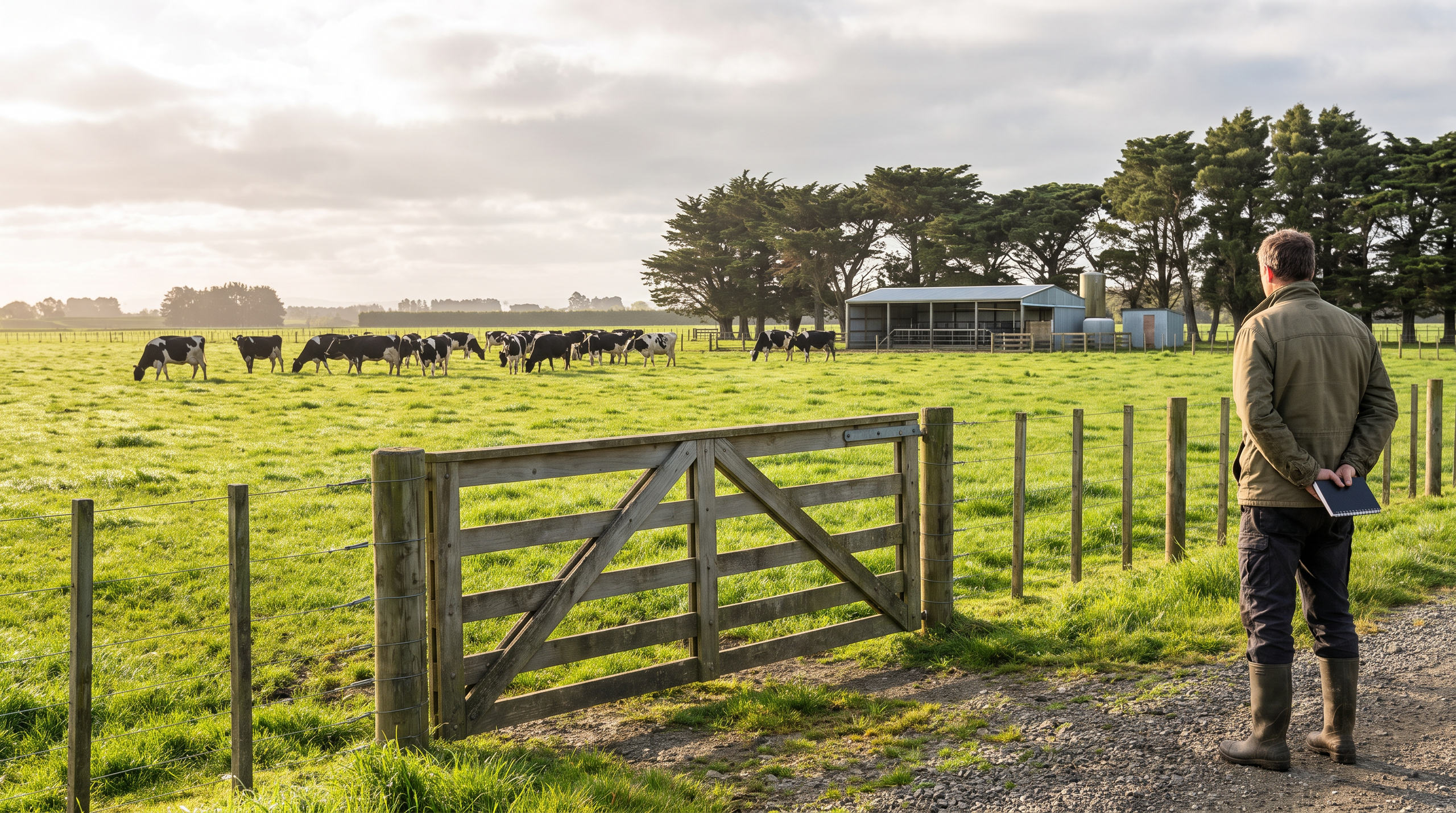
DairyNZ's 21 October case study on Abba Farm, near Palmerston North, puts a practical example behind a familiar farm-management idea: the numbers are more useful when they can be compared properly. Owner Kevin Argyle says DairyBase comparisons helped his team replace summer turnips with fodder beet. He reports a lower cost per kilogram of dry matter and higher yield, which he says helped reduce supplementary feed costs. No numerical savings or yield figures are given in the case study, but the decision was grounded in the farm's own records rather than a generic crop recommendation. [1]
What changed at Abba Farm?
Abba Farm is a 180-hectare, 600-cow operation about 10 kilometres southwest of Palmerston North, with three full-time staff and relief support. Kevin's focus is more homegrown feed. DairyNZ describes him using both physical and financial measures to track that aim, including production per cow and kilograms of dry matter grown per hectare. That pairing matters. A feed change can look attractive in one unit while creating a different result in another.
The fodder beet result is Kevin's report from one farm, not proof that every farm should make the same change. Soil, climate, rotation, stocking rate, labour and feed demand all shape the answer. Benchmarking is not a crop prescription. Its value is in giving a farmer a better basis for asking why a result differs and whether a change is worth testing on their own system. [1]
What does a useful benchmark compare?
DairyBase groups farms by factors such as ownership, region and farm production system. It can also recognise systems such as organic farming and winter milk. That is important because cost headings and production measures do not carry the same meaning across unlike businesses. A comparison with farms facing similar conditions is usually a more useful starting point than a national average. DairyNZ also advises discussing results with an adviser, alongside the financial and physical reports. [2] [3]
Units need the same care. Farm working expenses per kilogram of milksolids express cash spending relative to milk output. Pasture and crop harvested in tonnes of dry matter per hectare answer a different question. This measure relates to feed grown on the milking platform and harvested by cows or machinery. It is not interchangeable with a per-cow figure or a cost per hectare. Likewise, farm working or operating costs do not include interest, while operating expenses can include non-cash adjustments. [2]
Why is context important?
For Kevin, benchmarking has also made day-to-day conversations more specific. He uses the information to explain electricity-cost goals, preventive maintenance such as greasing and oil checks, and the link between those routines and repair or breakdown costs. Staff do not need a spreadsheet lecture. They do need to see what a cost line represents and what action may influence it.
That is a useful distinction for any management meeting. A benchmark is a prompt for a question, not a scorecard handed down from outside. If costs are higher than a comparable group, the next step is to understand the farm circumstances, check the records and decide whether there is something worth changing. A low number is not automatically good either if it has come at the expense of production, maintenance or future resilience.
What needs to be in the record?
Comparable data starts with timely data. Kevin recommends capturing records as the work happens, rather than reconstructing them later. Kevin would like more Manawatū and lower North Island farms participating, because a group needs enough farms to make comparisons reliable. DairyBase manager Jodie Goudswaard says a benchmarking group needs at least 20 farms for confidentiality and reliability, with larger groups giving greater precision. [1]
DairyNZ says recent MINDA and Farm Focus agreements can enable automatic uploads, and further links with fertiliser, processor and farm-organisation systems are being explored. That is promising, but it is not a replacement for checking what is being measured and how it is used. The quality of a comparison still rests on clear inputs and a fair match between farms. [1]
For DairyTech, that same disciplined measuring is relevant when assessing waste milk recovery. Costs and results still need their own evidence.