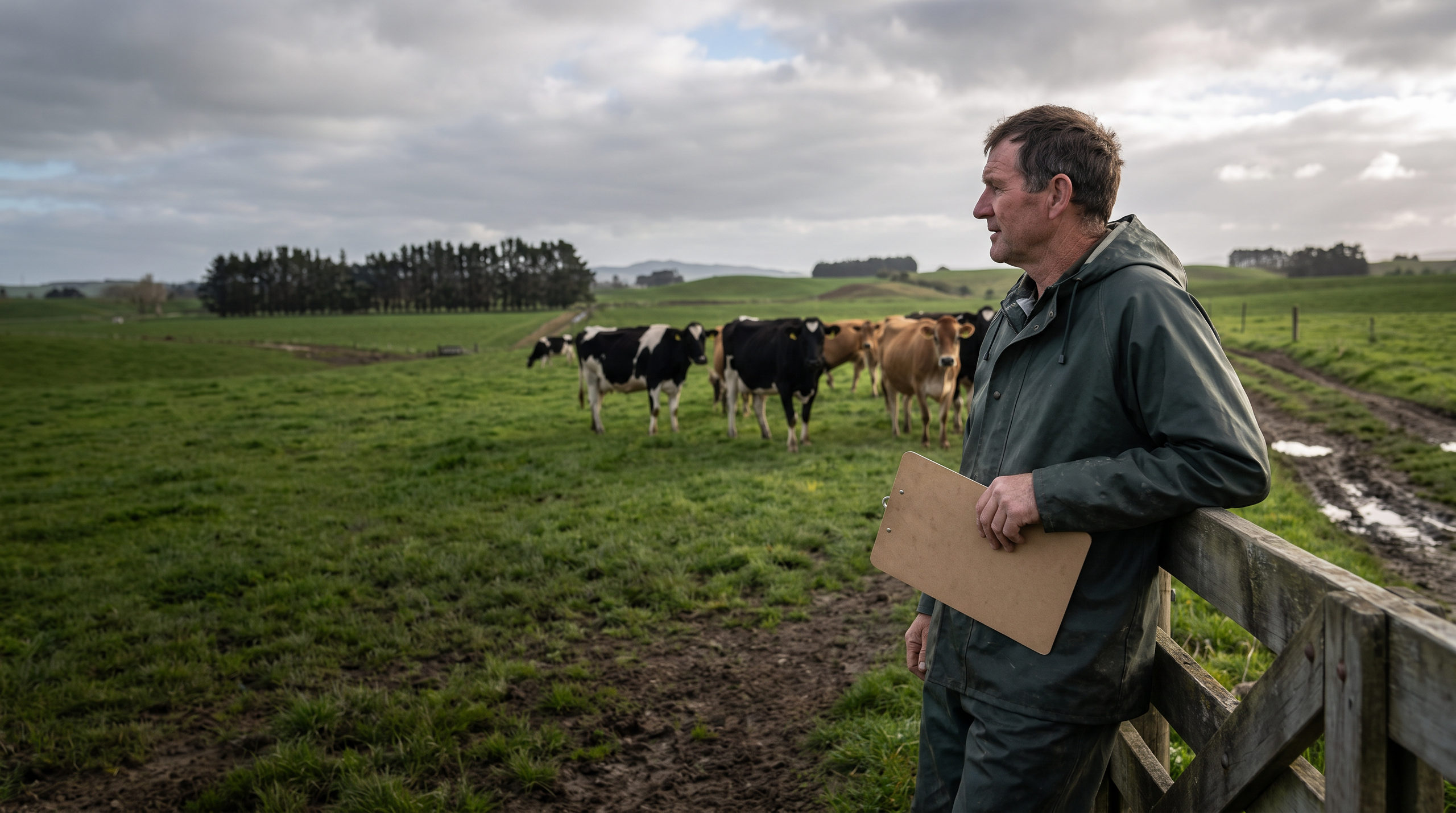
El Niño has moved from a weather headline into a practical business question for New Zealand dairy. DairyNZ's September economic update does not say every farm will face the same season. It does put a clearer set of national scenarios around the things that become difficult when pasture growth, feed availability and costs begin to move together.
That distinction matters. A scenario is not a prediction, and a national estimate is not a farm plan. It still makes the pressure points clearer: feed, pasture cover, water, cashflow and the timing of decisions.[1]
What DairyNZ has modelled
DairyNZ's EconTracker update compares a baseline season with Strong and Very Strong El Niño scenarios. Under the baseline, the national breakeven milk price is modelled at $8.62/kgMS. It rises to $8.90/kgMS in the Strong scenario and $9.07/kgMS in the Very Strong scenario.[1]
They are not a milk-price forecast or a farm-specific outcome. They illustrate how a more difficult season could affect national production costs and margins. DairyNZ says farm working expenses are also modelled to rise as the scenarios become more severe, with feed a major driver of the extra pressure.[1]
Why feed sits at the centre of the story
DairyNZ expects pasture to take the first hit in a dry scenario. Its modelling puts national milk production about 2.1 percent lower under a Strong El Niño and around 3.3 percent lower under a Very Strong event. The organisation says the North Island has greater exposure in its modelling because of its reliance on rainfall and purchased feed.[1]
That does not mean every North Island farm faces the same outcome. Regional detail is the point. DairyNZ's El Niño guidance says Northland and Waikato may see more variable and less reliable rainfall, with a higher risk of extended dry periods through summer. For western and lower South Island areas, wetter conditions can create a different set of problems around pasture quality, access and soil damage.[2]
For an industry that often talks about average conditions, that is an important reminder. The useful question is not whether El Niño is good or bad for dairy as a whole. It is how a particular region, feed system and water position may respond if the season develops as expected.
Why this is also a budget conversation
DairyNZ's latest Inside Dairy update notes that August and September can already be demanding months for cashflow, as milk income builds while feed, fertiliser, fuel and repair bills continue to arrive. Regular budget reviews can make pressure points visible earlier, before a farm is forced into a reactive conversation.[3]
The El Niño scenarios make that timing more relevant, not less. DairyNZ's regional guidance advises farmers to treat forecasts as guidance rather than certainty, revisit plans as conditions change and use clear trigger points for the season. Its resources cover feed budgeting, pasture monitoring, water, animal welfare and business continuity. Farm-specific choices still belong with the farmer and the relevant adviser.[2]
What to watch from here
The next few months will clarify the picture. Key questions are whether regional rainfall and soil moisture move in line with the outlook, how pasture growth responds, whether feed availability tightens, and how quickly input costs affect farm budgets. Those are linked, but they are not identical.
For the wider dairy sector, the useful discipline is to keep the weather update, feed position and financial position in the same conversation. A higher payout expectation cannot be read in isolation from the cost of maintaining production through a difficult season.
A small DairyTech context
For DairyTech, this is industry context, not a claim about a product or solution. When feed and cashflow are under closer scrutiny, routine operating losses are worth measuring clearly too. Knowing what is diverted, stored or disposed of does not remove weather risk, but it helps a farm understand its own system before making any broader decision.