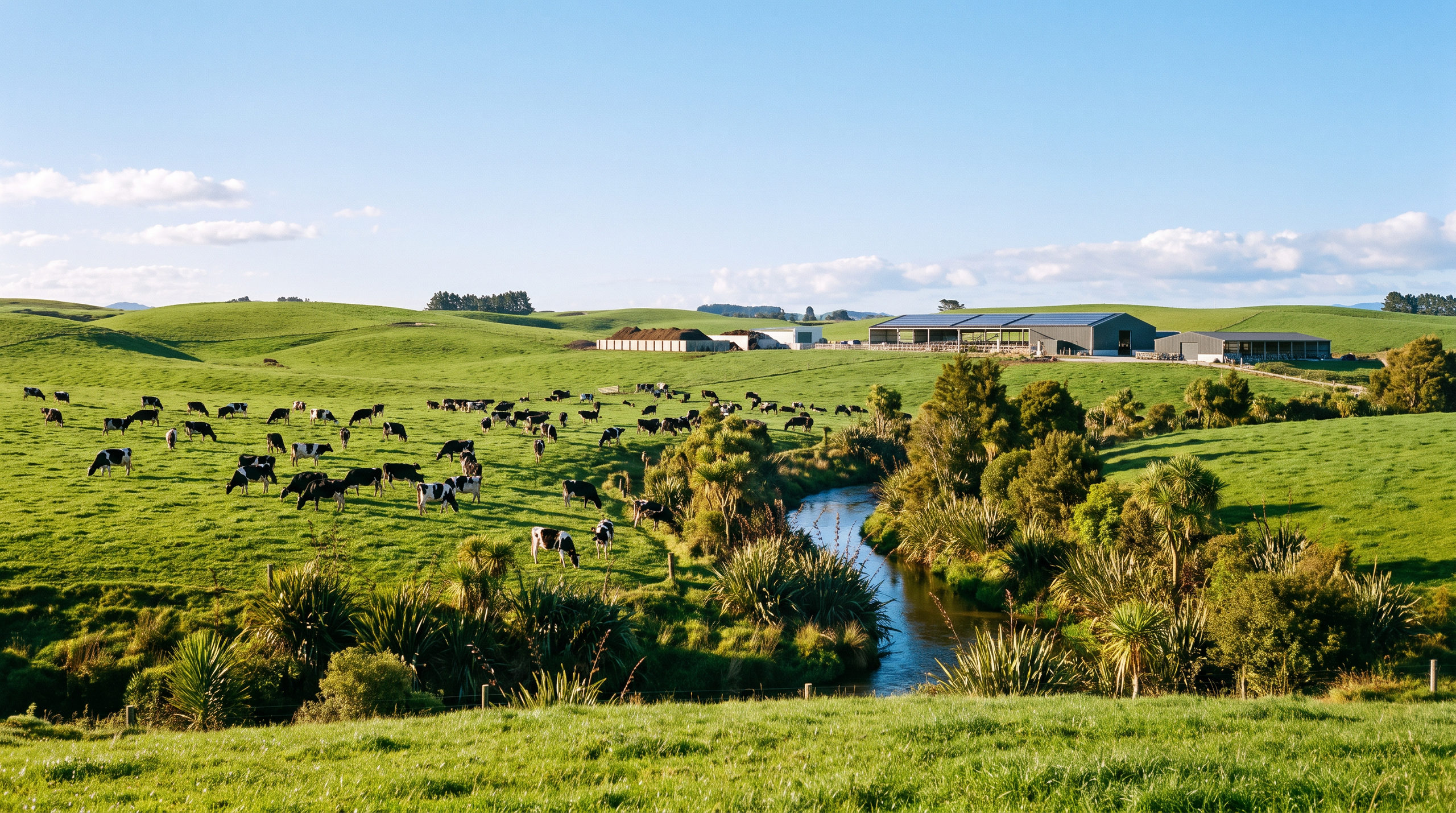
The New Zealand dairy industry is navigating a significant transition. After years of feeling under siege from environmental pressures and shifting regulations, a new sense of confidence is emerging. This confidence, however, comes with a clear condition. The licence to grow agricultural production is no longer automatic; it must be earned through demonstrable environmental performance.
That is the central message from Ministry for Primary Industries director-general Ray Smith, who told the NZ Herald that New Zealand stands at one of the most important turning points for the food and fibre sector since the post-1980s reform era. "We've actually earned the right to grow," Smith said. "But we've earned that right because people understand growth has to happen alongside environmental performance. We cannot grow at the expense of the environment."
The focus has shifted from whether the industry should expand to how it can do so while meeting the increasingly sophisticated demands of regulators, consumers, and global markets. For dairy farmers, this shift has practical consequences that reach from the paddock to the balance sheet.
What are the Key Drivers of this New Confidence?
Several forces are contributing to the renewed optimism within the sector. The industry has demonstrated remarkable resilience in the face of significant external shocks. Geopolitical turmoil sent global diesel prices soaring, with the cost of fuel nearly doubling over the past year. Despite this, the sector adapted without emergency subsidies, showcasing an underlying strength that was not always visible during the years of regulatory pressure.
Global demand for high quality protein is providing a powerful tailwind. As consumer preferences shift towards protein-rich diets, New Zealand's reputation for producing premium, pasture-raised dairy products positions it well to capitalise on this trend. New trade agreements, particularly the potential offered by the Indian market, promise to reshape New Zealand's access to some of the world's fastest growing consumer bases. Smith described the India free trade agreement as one of the four big issues shaping the year, though he cautioned that the gains would take time to materialise.
New Zealand's position in global dairy trade remains formidable. According to Rabobank's 2026 World Dairy Map, New Zealand accounted for 22.1 percent of world dairy exports in 2025, cementing its place as the world's largest single-country dairy exporter. In whole milk powder specifically, New Zealand holds a 56 percent share of global exports, a position that has remained remarkably stable over time.
Why does Environmental Credibility Matter More Than Ever?
While the economic indicators are positive, the real test for New Zealand agriculture over the next decade will be proving that growth can coexist with environmental credibility. This balance increasingly determines access to premium markets and the social licence to operate.
International buyers are applying greater scrutiny to the environmental credentials of their suppliers. Retailers in the United Kingdom and European Union are beginning to require verified sustainability data as a condition of supply contracts. This is not a distant regulatory threat; it is already shaping purchasing decisions in markets that New Zealand dairy depends on.
Domestically, the regulatory environment has also evolved. Freshwater rules, greenhouse gas reporting requirements, and nutrient management plans have added compliance layers that require investment and management attention. Farmers who have already made those investments are now in a stronger position than those who deferred them.
The DairyNZ economic report cited by Farmers Weekly reinforces this picture. New Zealand dairy continues to be a global leader, but that leadership is increasingly conditional on maintaining environmental standards that justify the premium positioning of New Zealand dairy products. The report notes that the industry's competitive advantage is not simply about cost of production; it is about the full value proposition, which includes environmental stewardship.
How does On-Farm Resource Efficiency Fit into Earned Growth?
Earned growth is not only about reducing emissions or managing freshwater. It encompasses the broader principle of doing more with less, extracting maximum value from every input while minimising waste and environmental discharge. This is where on-farm technology plays a practical role.
One area where resource efficiency gains are available to most dairy farms is the management of non-saleable milk. Antibiotic-treated milk, colostrum surplus, and transition milk represent a significant volume of liquid that cannot enter the supply chain but still carries nutritional value. On most farms, this milk is currently discharged to effluent systems or fed to calves in ways that are difficult to manage consistently.
Converting that milk into stable animal feed-grade powder addresses two earned growth objectives simultaneously. It eliminates a discharge stream that contributes to freshwater and effluent management pressure, and it recovers nutritional value that would otherwise be lost. The AXIS system is being developed to make that conversion practical at farm scale, subject to validation, regulatory compliance under the ACVM Act 1997, and sound operating economics.
What does the Fonterra Milk Price Signal Mean for Farm Investment Decisions?
Fonterra recently revised its 2026/27 forecast farmgate milk price downward to a midpoint of $9.50 per kilogram of milk solids, citing softer global demand conditions. For farmers planning capital expenditure, this creates a familiar tension between the need to invest in environmental compliance and the pressure to manage costs in a lower-price environment.
The earned growth framework offers a useful lens for navigating that tension. Investments that simultaneously reduce environmental liability and recover value from existing resources are more defensible than those that address only one objective. Technology that reduces effluent discharge while producing a usable output fits that description, provided the economics stack up at the farm level.
The broader message from MPI and industry bodies is that the current period of lower prices should not be used as a reason to defer environmental investment. The regulatory and market requirements that underpin earned growth are not going away. Farms that use a lower-price period to consolidate their environmental position will be better placed when prices recover.
What are the Practical Next Steps for Dairy Farmers?
The earned growth imperative is not abstract. It translates into a series of practical decisions that farmers are already making or will need to make in the near term. Freshwater farm plans, greenhouse gas inventories, and effluent management upgrades are all part of the compliance landscape. The question is not whether to engage with these requirements but how to do so in a way that also supports farm profitability.
For farms managing significant volumes of non-saleable milk, the question of how to handle that stream efficiently is worth revisiting. Current practices vary widely, and the environmental and economic costs of those practices are not always fully accounted for. As regulatory scrutiny of effluent discharge increases, the case for on-farm processing solutions will strengthen.
The earned growth era rewards farmers who can demonstrate that their operations are improving, not just complying. That requires investment in measurement, management, and technology. It also requires access to solutions that are practical, affordable, and validated under New Zealand conditions. The industry's task over the next several years is to develop and deploy those solutions at scale.