What is the current state of New Zealand dairy production?
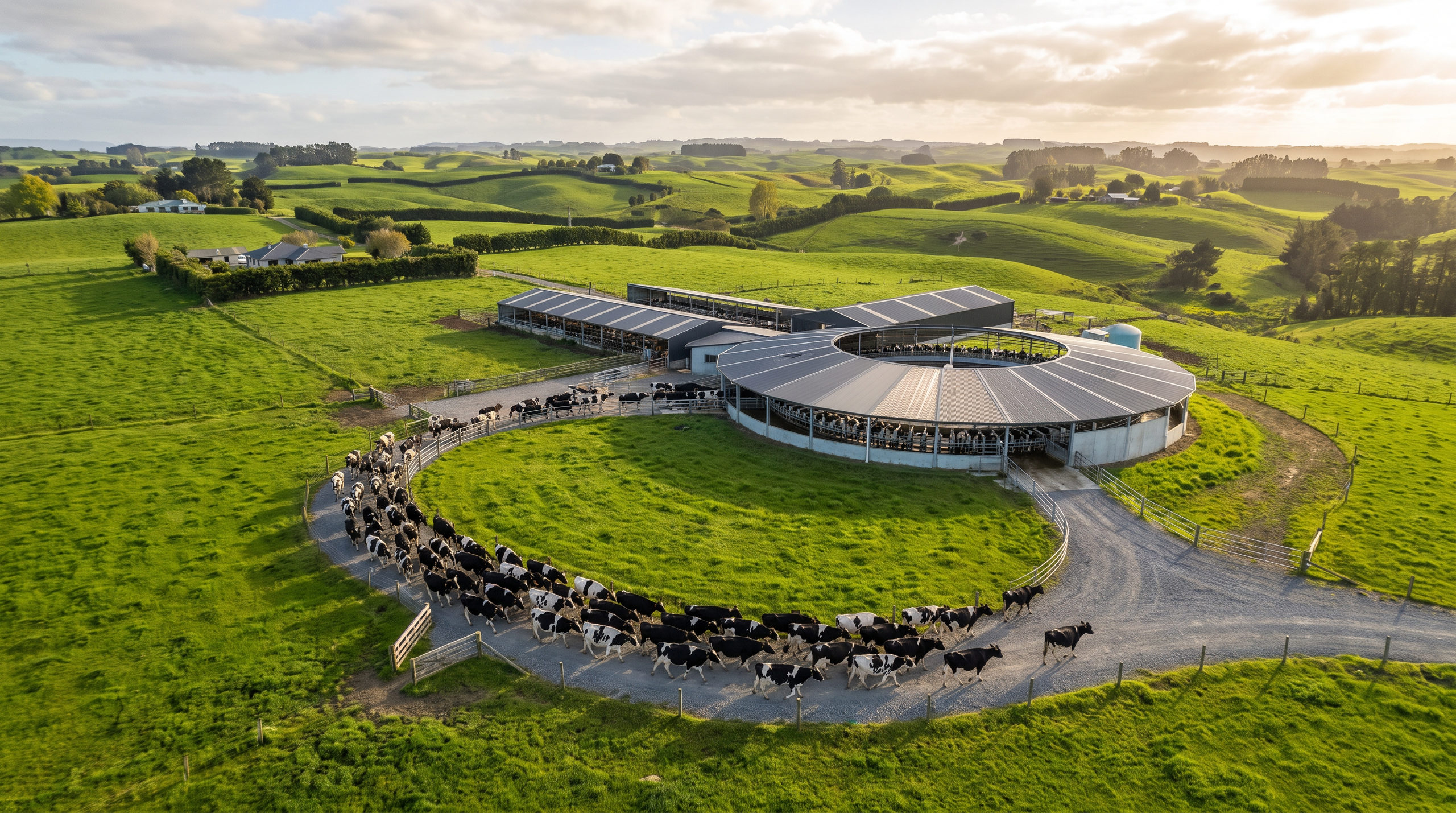
The New Zealand dairy sector has recently concluded a record breaking season. According to data from the New Zealand Exchange and the United States Department of Agriculture, the 2025 to 2026 season saw aggregate processing intake reach an unprecedented 22.39 million tonnes of raw milk. This output translated to a historic 2.02 billion kilograms of milk solids, representing a substantial 4.5 percent surge compared to the prior season and surpassing the previous record set in the 2020 to 2021 production cycle. The final stages of the cycle were particularly strong, setting a new benchmark for the month of May with 108.7 million kilograms of milk solids collected.
This exceptional production density reflects a structural transition within the national industry. The sector is pivoting away from a multi year consolidation phase and moving back into aggressive expansion. The volume surge was fundamentally catalysed by robust global dairy commodity prices early in the season, which provided independent operators with the necessary cash flow to lengthen milking periods, expand national herd sizes, and invest in strategic infrastructure. A significant portion of this capital expenditure was directed towards advanced on farm storage units for supplementary feed lines.
Why does record production create economic pressure?
While record production volumes are typically a positive indicator, the current macroeconomic environment is presenting significant challenges for New Zealand dairy farmers. Despite the historic yields, international dairy economists project a near term contraction in the export supply curve. Furthermore, Fonterra recently revised its forecast Farmgate Milk Price for the 2026 to 2027 season downwards. The new forecast sits at $9.25 per kilogram of milk solids, with a range of $8.00 to $10.50. This represents a drop from the opening forecast of $9.75 announced in May.
This price revision reflects softer than expected global demand amid strong supply, particularly from key exporting regions like the United States and Germany. Recent Global Dairy Trade auctions have seen consecutive price drops, further compounding the pressure on farmgate returns. With most farmers breakeven milk prices sitting around the high $8 per kilogram mark, and farm input costs continuing to rise due to geopolitical conflicts and maritime transport disruptions, profit margins are becoming increasingly slim. The anticipated severe El Nino weather pattern also poses a risk to domestic production as the new season progresses.
How can farmers manage the hidden cost of waste milk?
In this environment of tightening margins and record overall production, the issue of on farm waste management becomes critical. Waste milk is a persistent operational reality for all dairy farms. It encompasses surplus colostrum from the first days post calving, milk withheld during antibiotic treatments, and milk from cows with high somatic cell counts. The volume of this non saleable milk scales proportionally with overall herd production, meaning the recent record season has inevitably generated significant quantities of waste milk.
Managing this waste stream presents both environmental and economic challenges. Traditional disposal methods, such as discharging to effluent ponds or feeding directly to calves, are facing increased scrutiny. Environmental regulations, including those outlined in the Our Freshwater 2026 report and regional council rules, place strict limits on nutrient and effluent discharge to protect waterways. Furthermore, feeding antibiotic laden milk to calves carries the risk of developing antimicrobial resistance, a growing concern for both animal and human health.
What is the value of recovering animal feed-grade powder?
The traditional view of waste milk as a disposal problem is shifting towards an opportunity for value recovery. Converting surplus or non saleable milk into a stable, usable product directly on farm offers a practical solution for New Zealand dairy farmers. By processing this waste stream, farmers can mitigate environmental discharge risks and reduce the burden on effluent systems.
More importantly, this approach transforms a liability into a valuable asset. The recovered product, an animal feed-grade powder, can be utilised as a supplementary feed source, reducing the reliance on imported feeds like Palm Kernel Expeller. This is particularly relevant given the recent fluctuations in supplementary feed costs and the strategic push for greater on farm resilience. The AXIS system provides a pathway for this transformation, enabling the efficient conversion of waste milk into a high quality, stable animal feed-grade powder.
Why does on farm processing support long term sustainability?
The future of the New Zealand dairy industry depends on its ability to adapt to compounding challenges, including water pollution concerns, emissions targets, and market volatility. A recent analysis in Carbon News highlighted that the sector faces an uncertain future and must adopt transition pathways to ensure long term viability. One such pathway involves diversification and the adoption of more sustainable farming practices.
Implementing on farm processing solutions for waste streams aligns perfectly with these sustainability goals. It represents a move towards a circular economy model at the farm level, where waste is minimised and resources are maximised. By recovering value from waste milk, farmers not only improve their immediate economic margins but also demonstrate a proactive commitment to environmental stewardship. This proactive approach is essential for maintaining the sector social license to operate and securing its position in a rapidly evolving global food system.
How can the sector navigate regulatory changes?
The regulatory landscape governing dairy farming in New Zealand is continuously evolving. Regional councils are implementing stricter rules regarding freshwater management and effluent discharge, while national policies are increasingly focused on reducing agricultural emissions. Navigating these changes requires a strategic approach and a willingness to invest in innovative solutions.
Technologies that facilitate the on farm processing of waste streams provide a buffer against regulatory uncertainty. By actively reducing the volume of waste requiring disposal, farmers can more easily comply with discharge limits and mitigate the risk of environmental non compliance. Furthermore, demonstrating proactive waste management strategies can strengthen the sector position in ongoing policy discussions, showcasing a commitment to continuous improvement and environmental responsibility. The ability to produce animal feed-grade powder on farm is a tangible example of this commitment in action.
What is the strategic outlook for the 2026 to 2027 season?
As the New Zealand dairy sector enters the 2026 to 2027 season, the focus must remain on resilience and efficiency. The combination of a lower forecast milk price and rising input costs necessitates a critical evaluation of all on farm operations. Maximising the value of every resource, including waste streams, will be paramount for maintaining profitability.
The record production achieved in the previous season demonstrates the inherent capacity and capability of New Zealand dairy farmers. However, translating this production into sustainable economic success requires a strategic shift in how waste is perceived and managed. By embracing solutions that convert liabilities into assets, such as producing animal feed-grade powder, the sector can navigate the current economic pressures while building a more robust and sustainable foundation for the future.