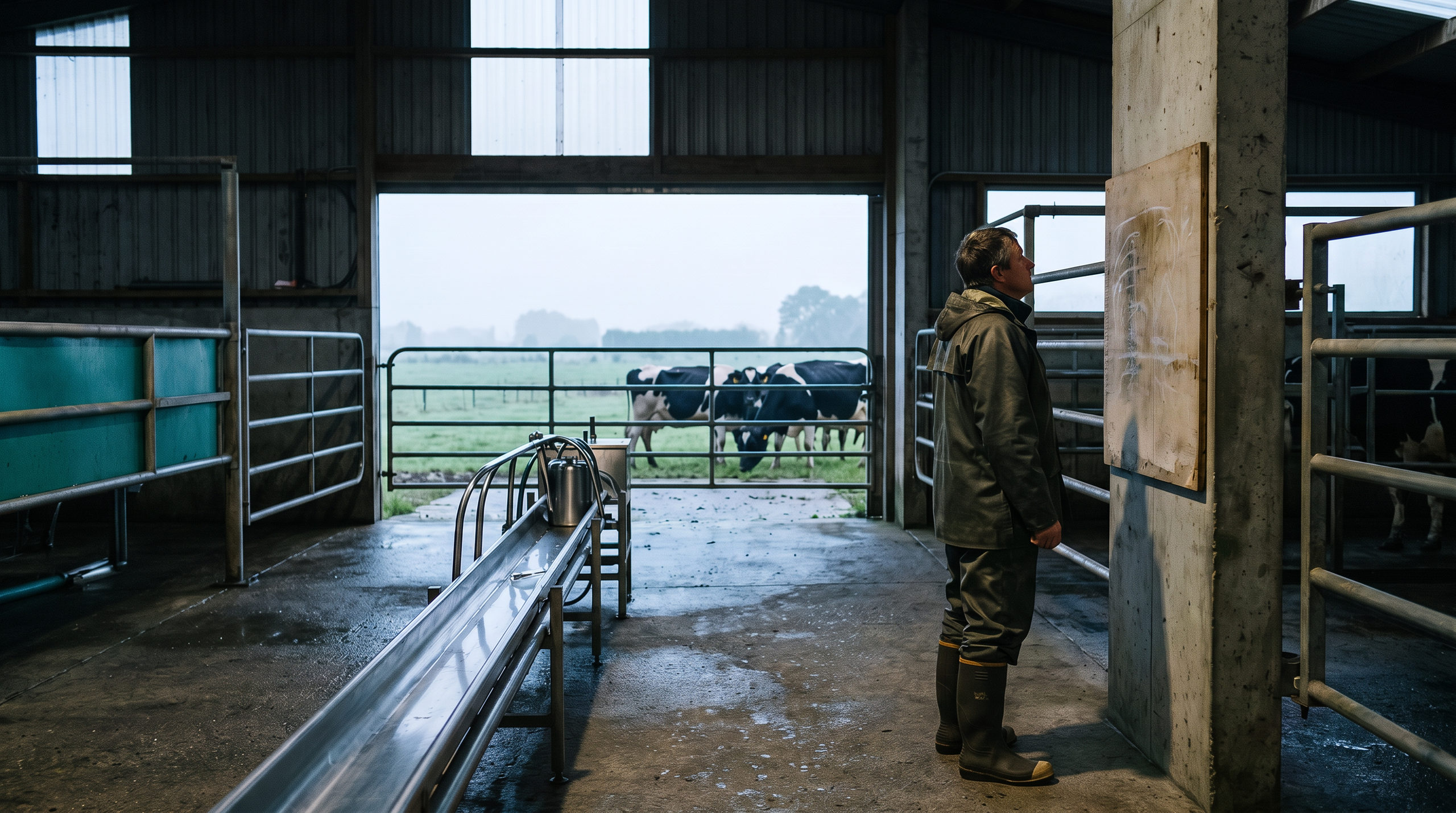
Waste milk is often spoken about as though it were one thing. On a working dairy farm, it can be several very different streams. It may be milk withheld after a veterinary treatment, surplus colostrum, transition milk, or milk taken out of supply because a quality question needs to be resolved. The litres may look similar in a vat, but the reason for diversion changes the management decision that follows.
That is why the first step in a recovery conversation is not choosing equipment or a destination. It is separation. A farm needs a clear way to identify what the stream is, why it has been diverted and what controls apply before any next step is considered.
Why does separation come before recovery?
DairyNZ advises that milk should not enter the vat if there is any suspicion it may contain antibiotic residue. It also emphasises clear animal identification and up-to-date treatment records for cows that have received antibiotics.[1] Those are practical disciplines at the shed, not administrative extras. They give the farm team a common understanding of where the milk sits in the system.
For a recovery pathway, that distinction is even more important. A label such as waste milk does not say enough about treatment history, quality status or the handling controls required. Treating every diverted stream as interchangeable can make a difficult operational decision look simpler than it is.
What should a farm know at the point of diversion?
A useful starting record is short and specific. It identifies the source or cow group, the reason the milk was diverted, any relevant treatment or withholding status, the approximate volume and where the milk was held next. The purpose is not to create paperwork for its own sake. It is to make sure the reason for diversion is still visible when a different person takes over the next part of the job.
Over several weeks, those records can also show whether the streams are predictable or exceptional. That matters when a farm is assessing storage, handling, labour and the potential role of new equipment. Good decisions are easier when the conversation starts with a known pattern rather than an estimate made at the end of a busy season.
Why should source status and intended use stay separate?
Source status does not disappear because milk is moved, stored or processed. Drying or concentrating a stream is not a substitute for identifying its origin, treatment history or the requirements that apply to its intended use. MPI provides separate guidance for the making, selling and use of animal feed, while its residue framework is built around good agricultural practice and traceability.[2][3]
That is also why DairyTech does not make a blanket claim that every diverted stream has the same recovery pathway. The right questions are practical and specific: what is this stream, what evidence is available, what separation is required and what would need to be validated before any product use is considered?
What does the research say about simple assumptions?
Waste milk has sometimes been treated as a convenient feed source without enough attention to its source status. An overseas eight-week study found that calves fed unpasteurised waste milk containing antibiotic residues had more diarrhoea episodes and changes in faecal microbiota than the comparison group.[4] The study was not carried out in New Zealand and it does not prescribe what an individual farm should do. It is a reminder that short-term convenience should not replace careful segregation and professional advice.
The practical lesson is not that every farm needs a complex new system tomorrow. It is that a clear separation routine creates options. It can reduce uncertainty at milking, support better conversations with the farm's existing advisers and provide a more credible foundation for any future recovery assessment.
What does recovery technology need to prove?
For a portable on-farm drying system, separation is part of the technical challenge. The system needs to fit around the farm dairy without compromising the primary supply chain. It also needs to demonstrate reliable handling, traceability and performance against the relevant product requirements. Those are validation questions, not assumptions.
AXIS is being developed as a portable, trailer-mounted drying system for this purpose. DairyTech's work is focused on whether suitable, separated streams can be processed into a stable animal feed-grade powder, subject to final validation and applicable requirements. The technology is in prototype validation. It is not a shortcut around farm processes, veterinary advice or regulatory obligations.
What is the next practical step?
Start by making the decision visible. For four weeks, record what is being diverted and why. Review the pattern with the people who handle the milk, then discuss it with the farm's existing advisers where appropriate. A recovery plan is only as credible as the separation behind it.
Sources
- DairyNZ, Animal movements, updated June 2026.
- Ministry for Primary Industries, Maximum residue levels for agricultural compounds, reviewed July 2026.
- Ministry for Primary Industries, Pet food, animal feed and nutritional supplements.
- Penati et al. (2021), Feeding Pre-weaned Calves With Waste Milk Containing Antibiotic Residues.